online salon for art, news, essays, and organizing action

Tag: protest

  • Why Protest? Reason #1: Different Games and When it’s Not a Game At all

    Episode 1 of a YouTube series on the question, “Why Protest?” Each video shares an answer from a different vantage point or experience of protest.

    Episode summary:

    GOP senators voted unanimously on 3/1/25 to target some of the already most vulnerable children for being different. Living in Maine, it’s necessary to point out this includes Senator Susan Collins.

    The morning after the vote, the Ivy League Debate Club circles in Democratic Leadership are murmuring their wishes that we regular folk avoid talking about it. “Shh. This issue loses the game in Maine!” they say.

    But we’re not in an oak-paneled room of cozy polite opponents winning on points. MAGA has played Kayfabe for years. Confidence wins that game. And that means confidence in one’s values, whether they be cruel (Republicans targeting kids) or kind (lifting up all children, not using them).

    The priorities of this argument are also oriented inappropriately to elections. Yes, elections matter, but winning them is not the ultimate goal. The ultimate goal is to build a constructive, trusting, nurturing society that includes and benefits as many people as possible, and they’re HURTING VULNERABLE KIDS. It is crucial to make that unacceptable, and that means standing up in our communities and setting the standard. That is what public demonstrations do: reset the agenda to reframe the stakes and priorities, with the confidence needed to win a Kayfabe audience over.
  • When The Never Is Inside Your Own House

    When The Never Is Inside Your Own House

    Our certainty in shared values seemed justified in simpler times.

    It’s easy to stand against Nazism when it’s an evil of the past. It’s something else when the Nazis have gained control of your own country, when they hold every major lever of power.

    When Vice President JD Vance told the Germans that they must make way for a new generation of Nazis, he did so as part of a delegation that included Jack Posobiec, an American Nazi who now wanders the halls of the White House at will, who a year before had lifted a crucifix while speaking at the Conservative Political Action Conference and declared,

    Welcome to the end of democracy. We are here to overthrow it completely. We didn’t get all the way there on Jan. 6, but we will endeavor to get rid of it, and we will replace it with this. That’s right, we will replace it with this, because all glory is not to government. All glory is to God!

    Glory to God in American politics is now shorthand for brutal totalitarian power. Glory to God in American politics has become an enemy to democracy.

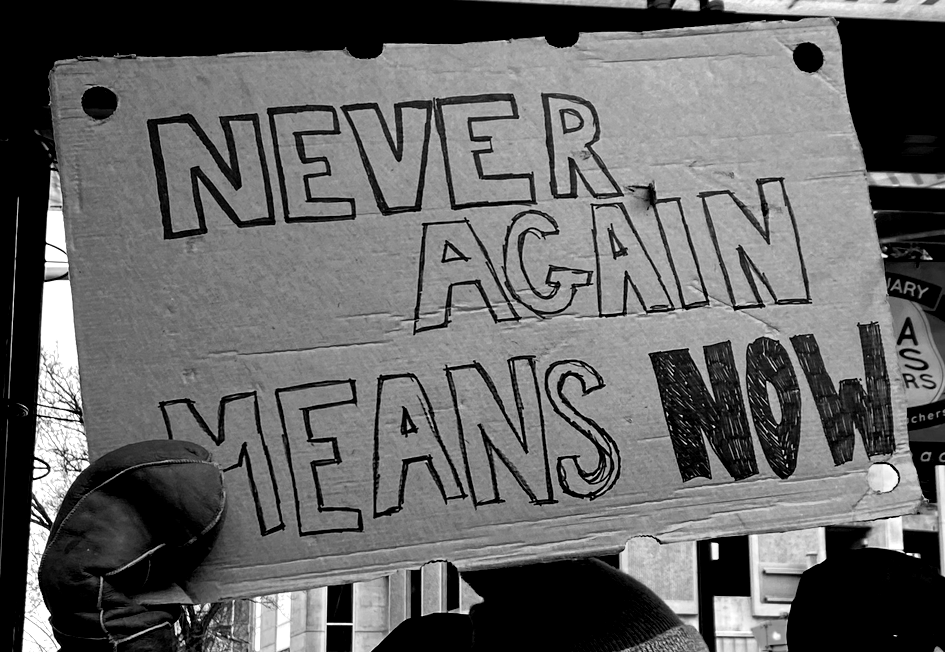
    When I learned the part that Posobiec played in the Munich conference at which support for Nazis in Germany became part of American foreign policy, I thought back to a sign I had seen lifted at a local protest in Ithaca, New York.

    In a mittened hand lifted high, the hand-drawn sign warned, “Never Again Means Now”.

    It’s easy to say “never again” when the Never we imagine is a foreign mistake that America fought against in a righteous war in the time of our grandparents. It’s an evil so specific, and so far removed in space and time, that it seems never likely to return.

    When Never returns speaking English with an American accent, in the name of the most popular religion in the United States, it’s easier to ignore the stories of new concentration camps riddled with horrific abuse of prisoners.

    After all, it doesn’t come with a ridiculous little mustache. It doesn’t present itself in grainy black and white films.

    It speaks to our familiar American prejudices, our cozy hatreds.

    It’s more difficult to resist the Nazi who stands under the American flag. It’s easier to just go shopping.

    Resistance in your own country, in your own time, is not an easy choice. It’s not a glamorous fantasy.

    Resistance isn’t resistance if it’s easy and painless. Resistance burns. Resistance aches.

    Their power is totalitarian. Our resistance cannot be limited to an occasional thumbs up on social media.

    Never Again protest sign
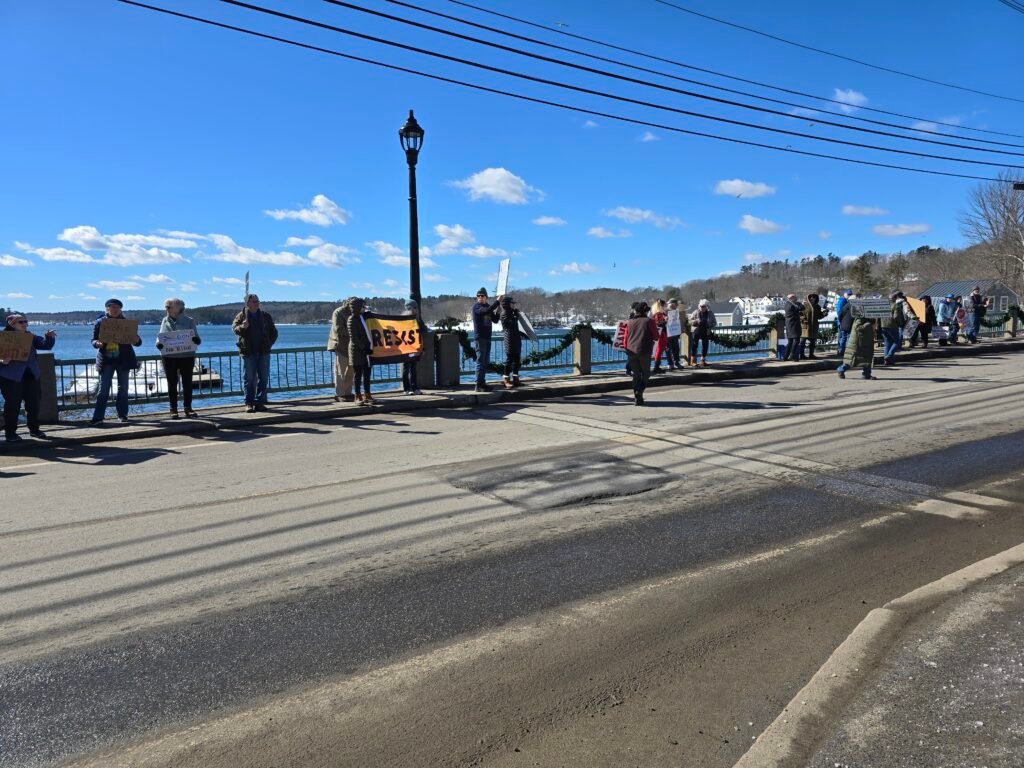
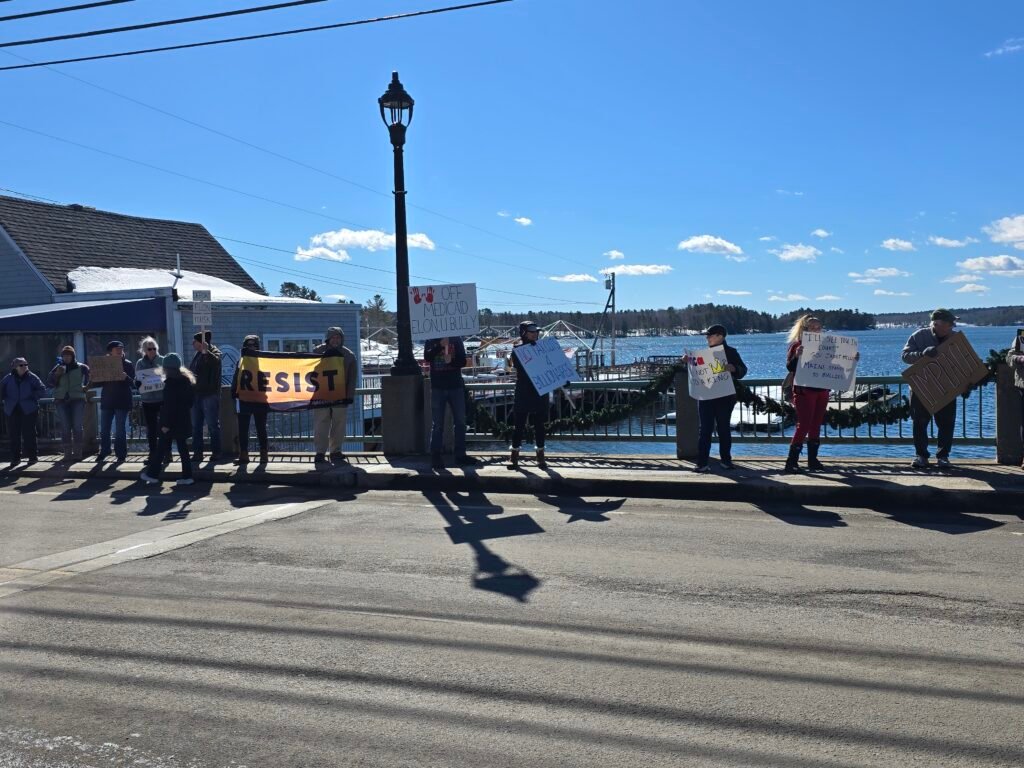
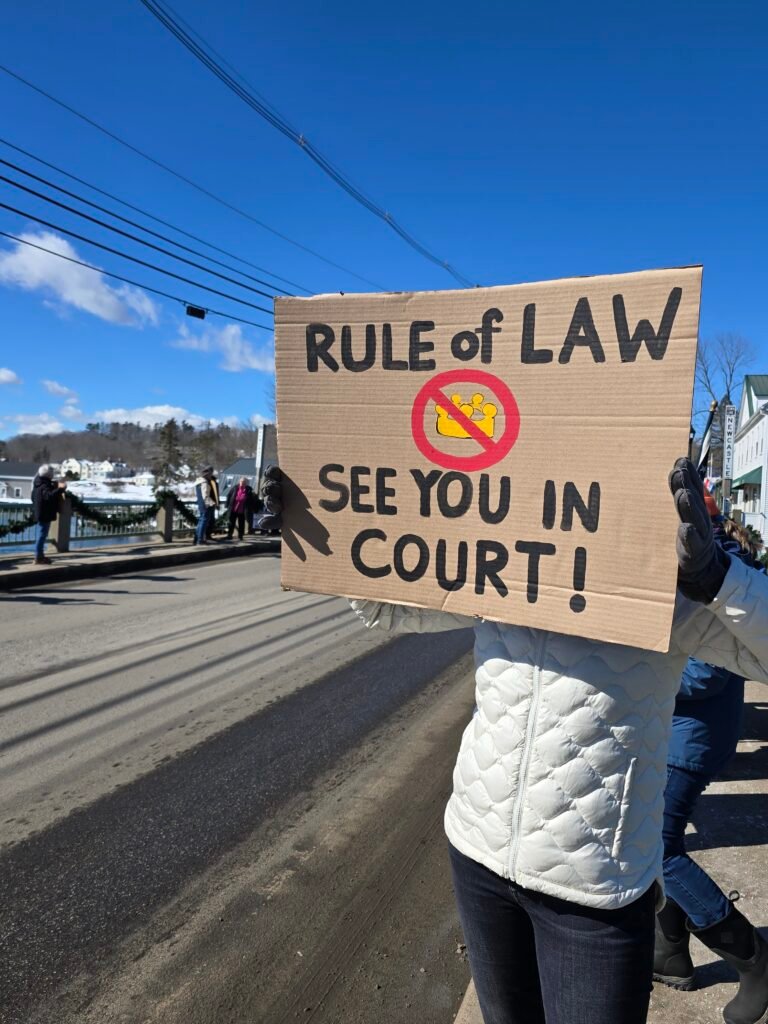
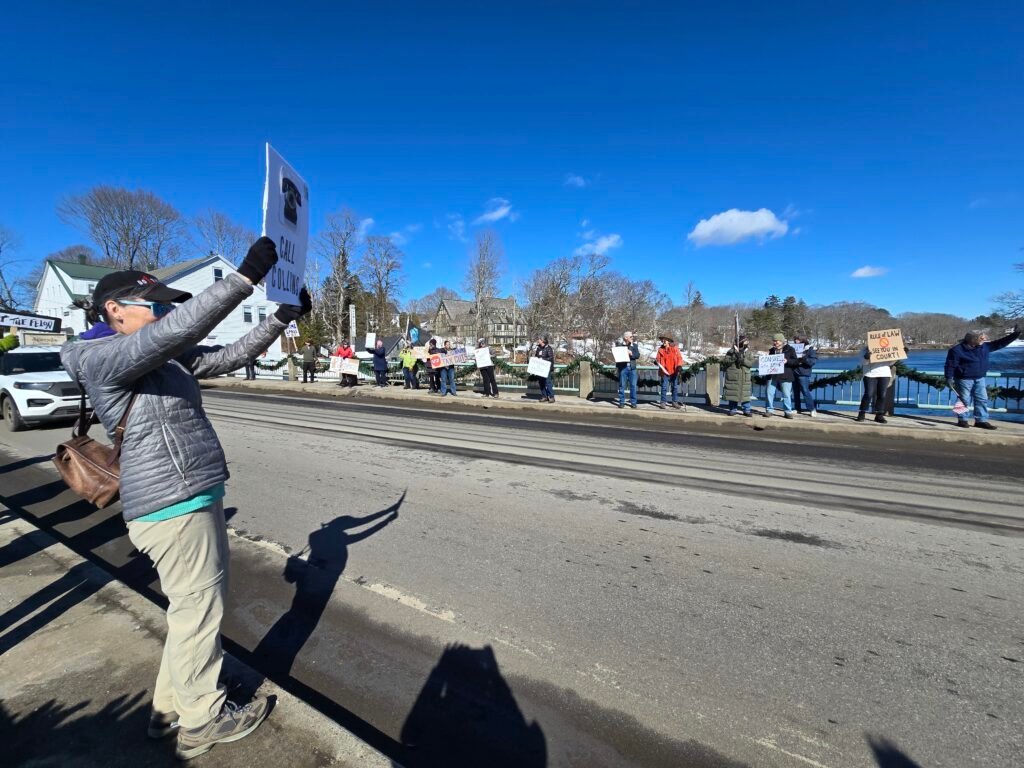
  • Protest on the Newcastle-Damariscotta Bridge 2/26/25

    Protest on the Newcastle-Damariscotta Bridge 2/26/25

    [Keep up with the news from Lincoln County Indivisible on Facebook -editor]

    We arrived in Newcastle for our first protest. (Well, since the late 60’s  during the Viet Nam War and the Nixon years. In retrospect,  Nixon was a breeze as compared with trump.)

    I had joined an Indivisible group just last week, and had been told that two weeks ago there were 10 protesters, and that last week there were 20. The hope was that this past Wednesday there might be 30 participants. 

    Well, nearly 90 people showed up and it was so encouraging. Lots of cars traveling both ways over the bridge,  with most all of the drivers honking and waving in solidarity.

    It was so gratifying to be with so many like minded people, all of us hoping to make a difference. 

    We have to save Democracy.

  • We Don’t Want No Illegal Kings Around Here (lyrics)

    Noel Jost-Coq wrote it, and she sings it!

    The folks who are gathering in Rockland every Saturday at noon are full of creative energy, coming up with their own messages of dissent.

    Lyrics:

    We Don’t Want No Illegal Kings Around Here

    We Don’t Want No Illegal Kings Around Here

    The Patriots Fought the English King

    And We Ain’t Going to Kiss that Ring

    No, We Don’t Want No Illegal Kings Around Here

    — written by Noel Jost-Coq for The Audacity, February 2025

  • Photo, Video, and Media Coverage of The Audacity’s  2/22/25 Camden Die-In

    Photo, Video, and Media Coverage of The Audacity’s 2/22/25 Camden Die-In

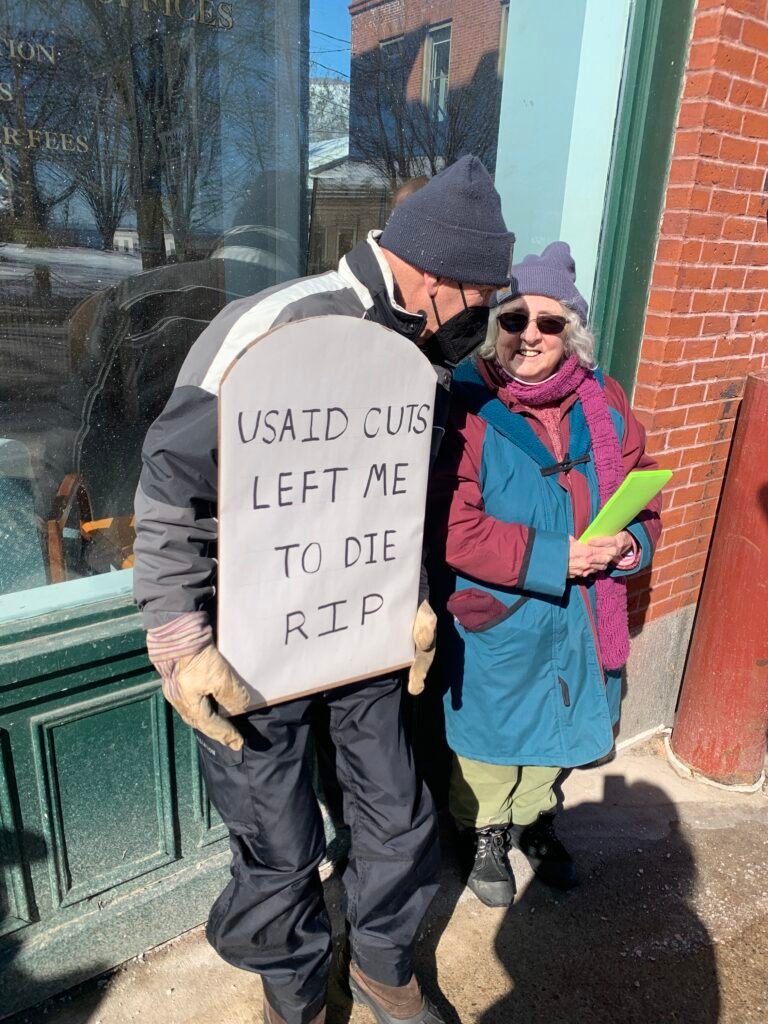
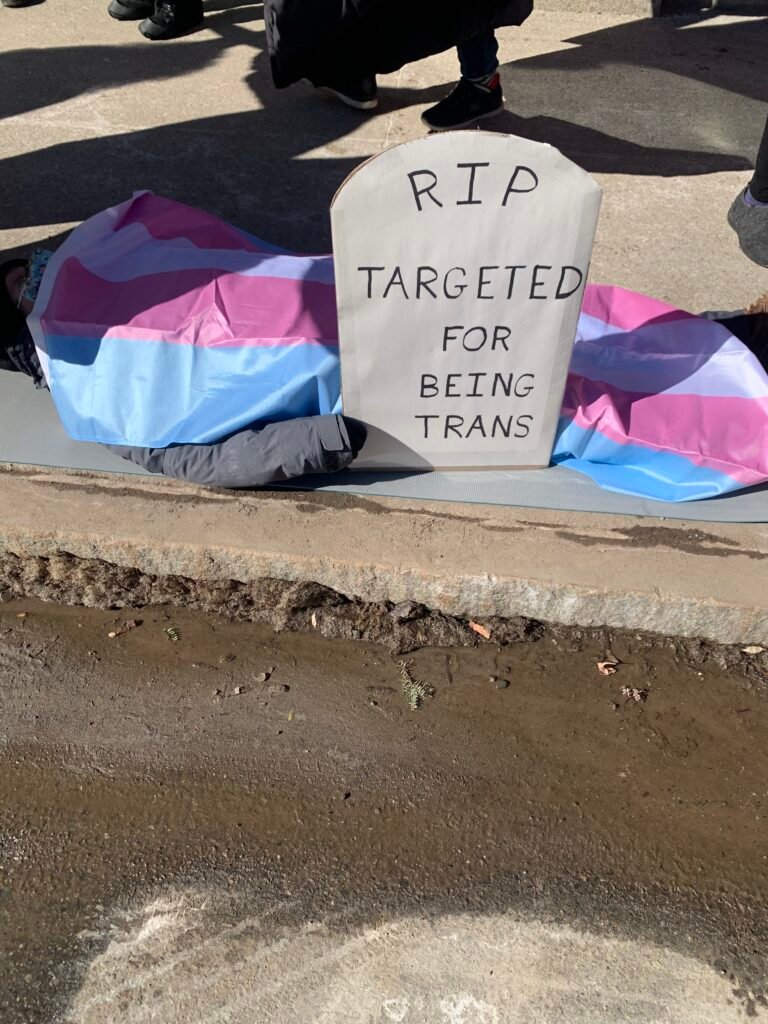
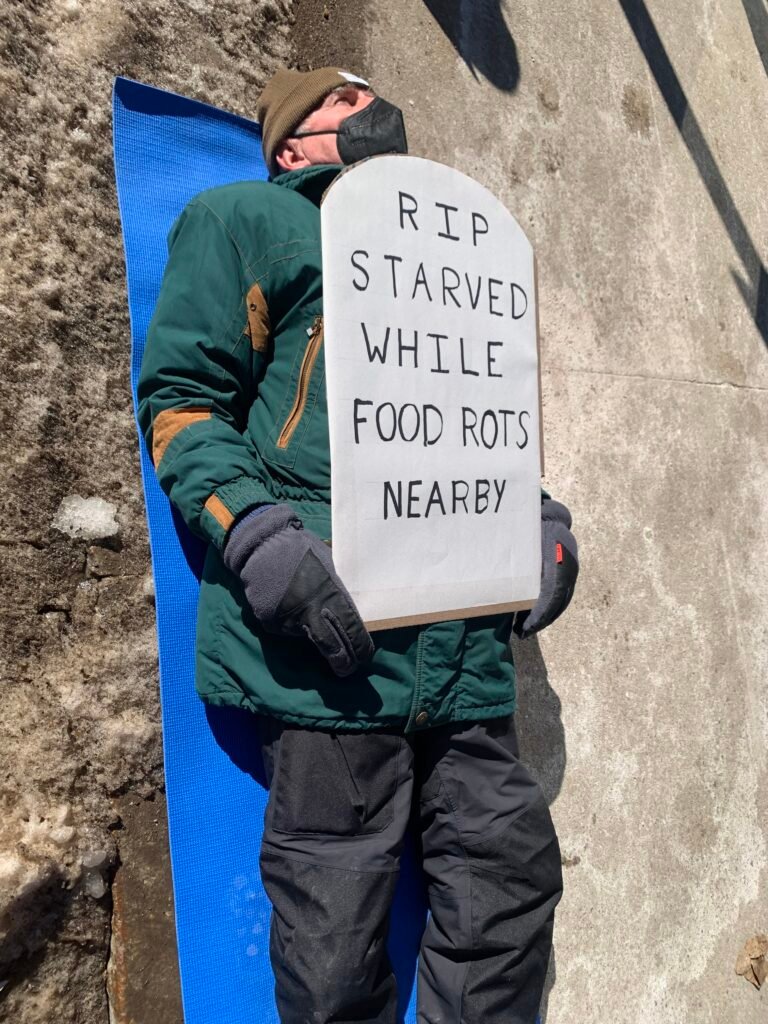
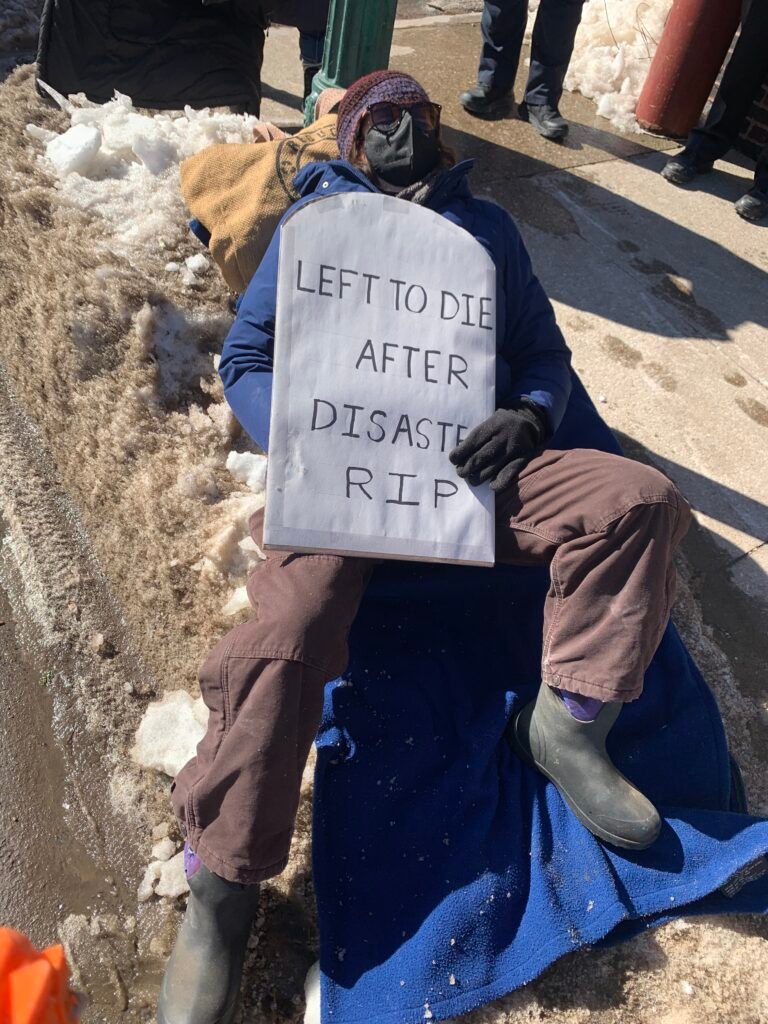
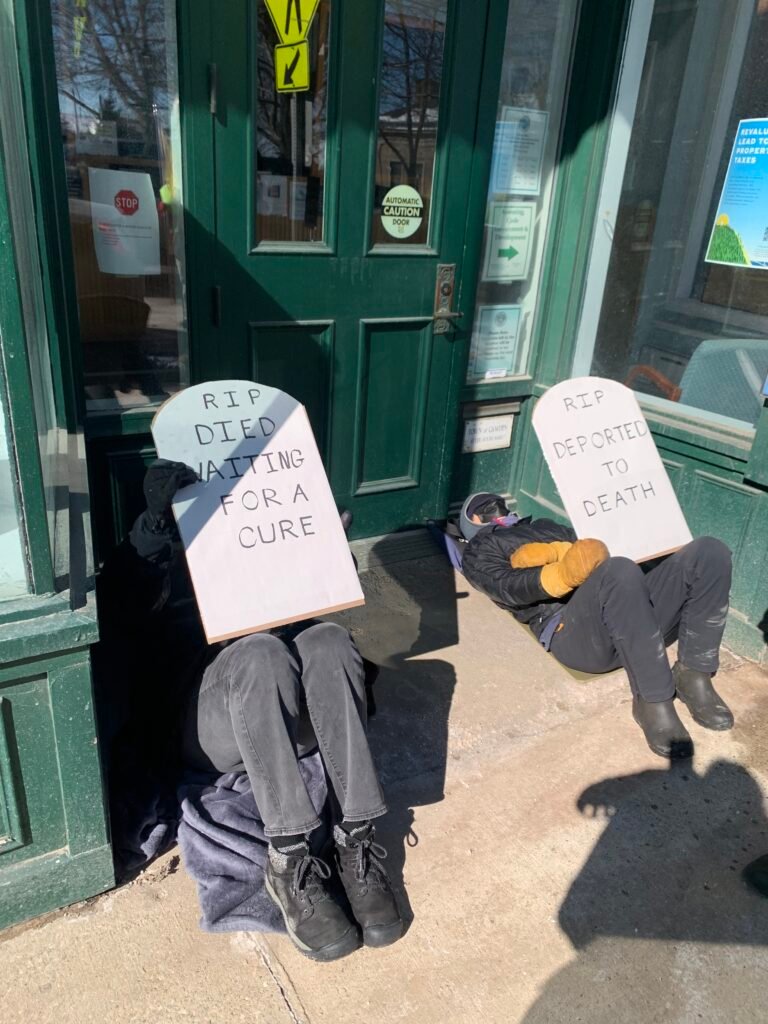
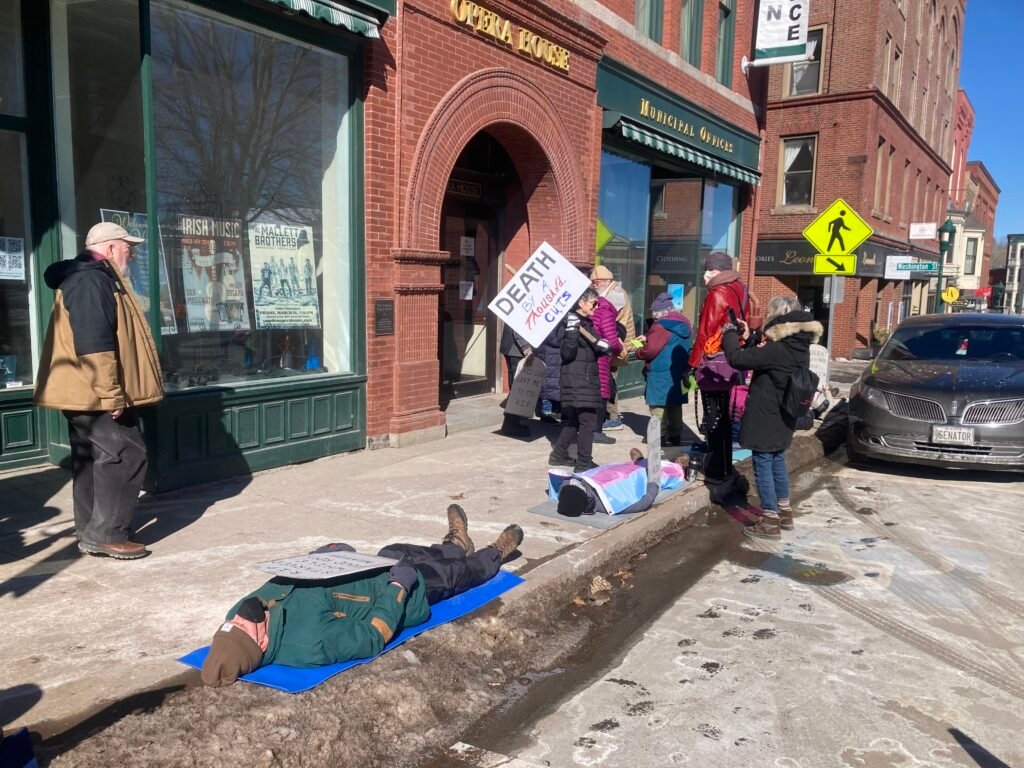
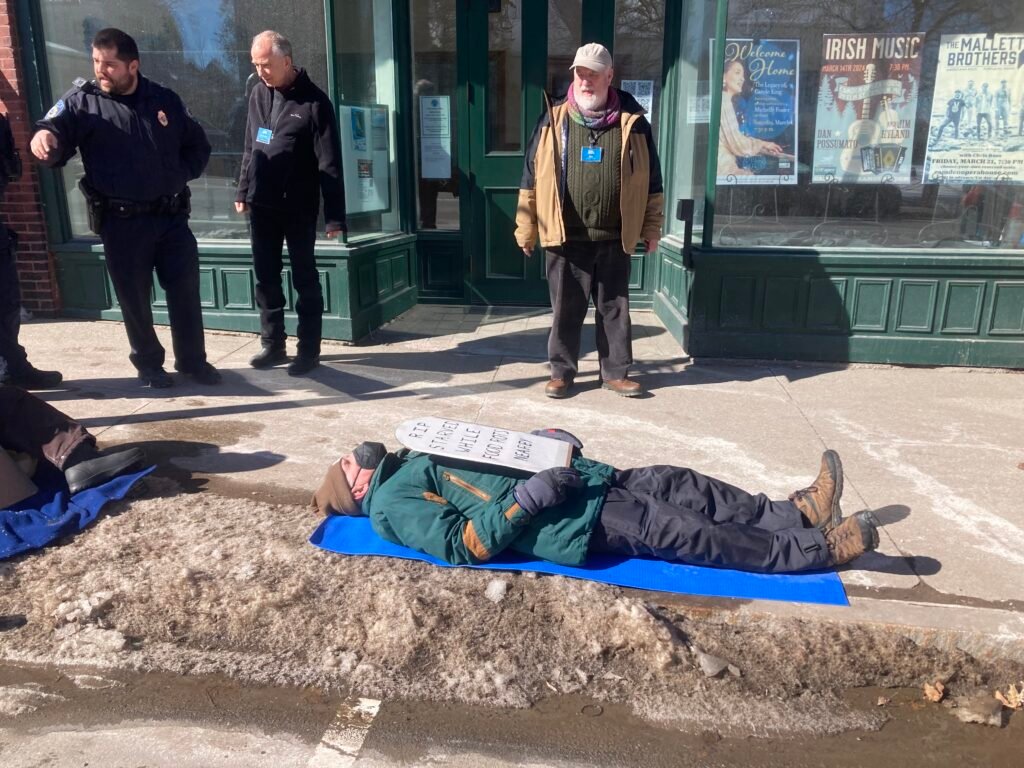
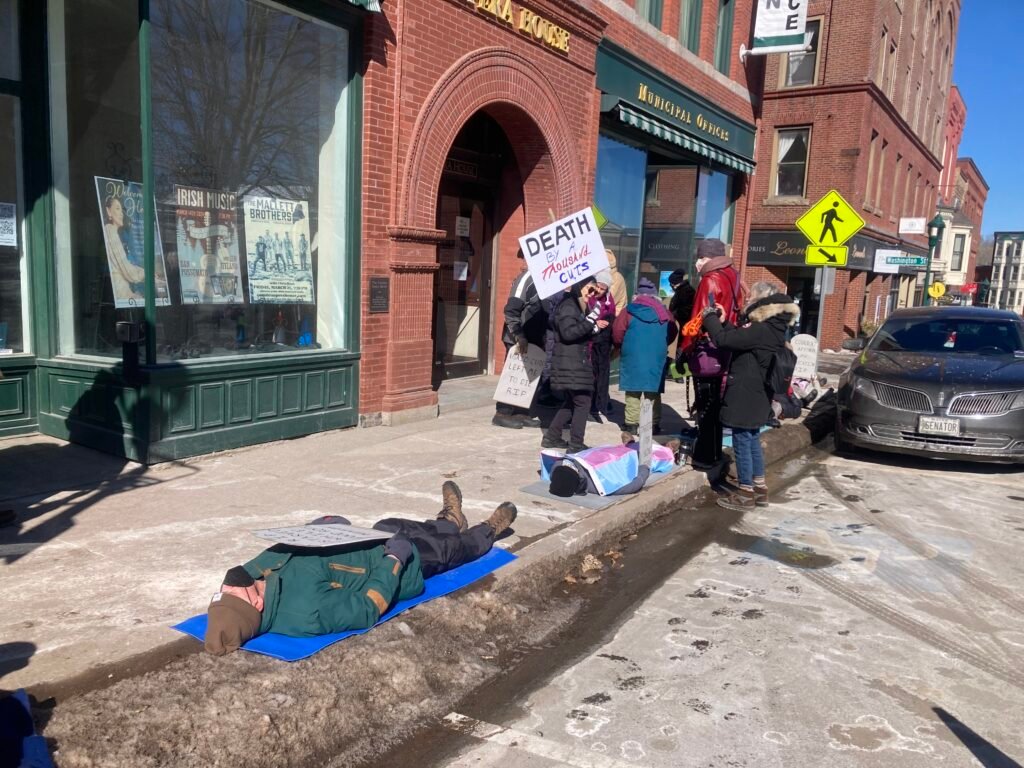
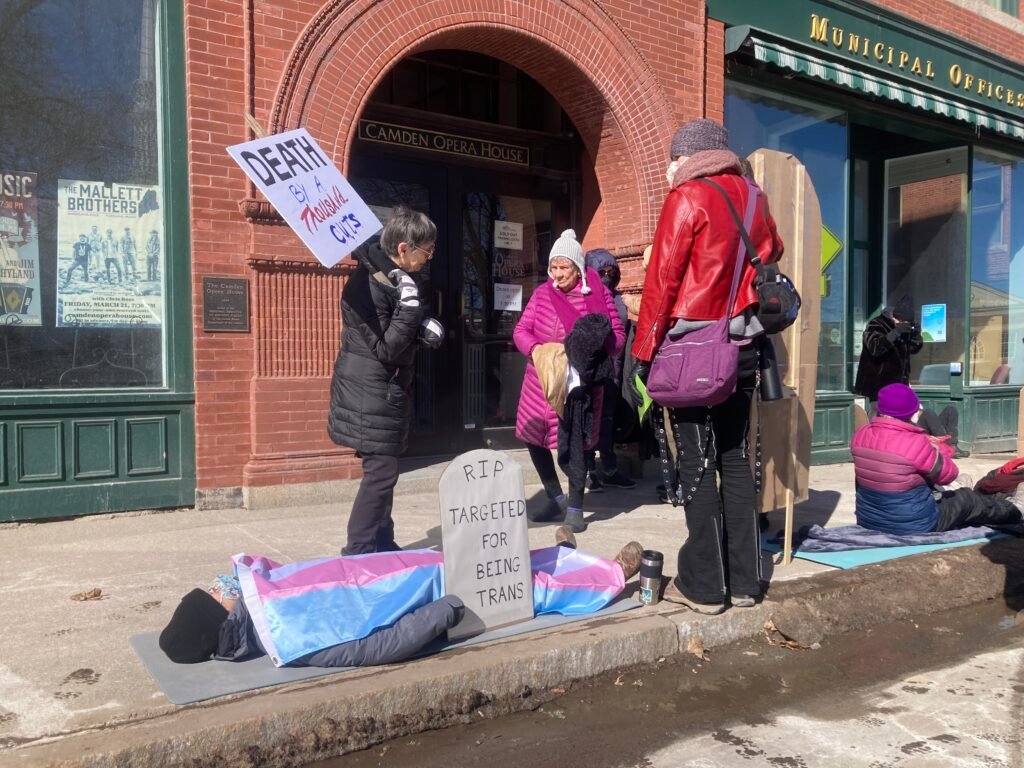
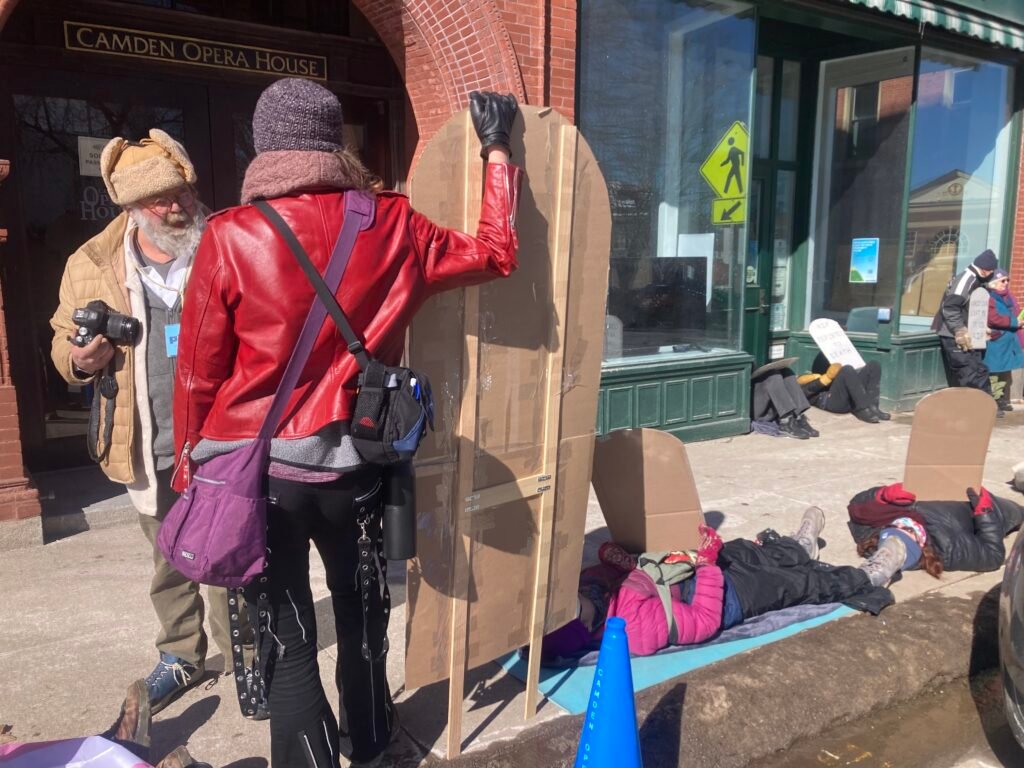
    Shortly after noon on February 22, 2025, members of the theater working group of The Audacity gathered in front of the Camden Opera House to die.

    As Oliver Kaplan of the University Denver notes in an essay for Political Violence at a Glance, the “die-in” is a time-honored method for making hidden violence apparent. Classic research on conformity has identified a troubling pattern: people are less inclined to be troubled by violence committed against people if that violence can be hidden from the senses. Die-ins don’t force passers-by to confront actual scenes of violence, but they do force people to symbolically confront that violence.

    The Camden Conference had selected its theme of “Democracy Under Threat: Global Perspectives” before the election of Donald Trump and the rapid descent into authoritarianism, bigotry, and corruption of his first month in office. The Audacity’s theater group decided to use a die-in to augment the conference by bringing the subject of democracy home, and to draw attention to those people who are already dying due to the disintegration of democracy under the hammer of the Republican Party in control of the House, the Senate, the White House, and an increasing share of the federal judiciary.

    Under a large tombstone declaring that “People Are Already Dying,” people lay with smaller tombstones reminding passers-by of the ways that the disabling of democracy leads to deadly consequences for real people.

    [Photo Credits: Dora Lievow]

    As conference-goers left for lunch, a demonstrator read the following statement:

    People Are Already Dying,

    and uncounted numbers more are

    threatened by the wrecking of

    American democracy.

    We Stand in Solidarity with

    the theme of the 2025 Camden

    Conference, “Democracy Under

    Threat,” and welcome attendees.

    We Will Exercise Our Rights

    to identify the threats to democracy

    and to tirelessly advocate for an end

    to this anti-democratic takeover.

    Please Join Us in conference

    halls, classrooms, and the streets.

    We must stand together or fall alone.

    We Are The Audacity, taking

    Creative Action Together.

    Occasionally, someone changed their mind, as happens in this video clip from Chris Wolf, reporting for the Pen Bay Pilot:

    Chris Wolf’s February 22 reporting on the protest can be found here, and Daniel Dunkle’s reporting on the same day for the Midcoast Villager can be found here.

    “This Could Be You,” reminds one gravestone captured in this photo set from Becca Shaw Glaser: